Introduction
In the rotorcraft world, few acronyms carry as much weight—or urgency—as AOG: Aircraft on Ground. Picture a medevac helicopter stranded in a remote area, unable to respond to a life-saving call due to a critical rotor blade bolt failure. The operator declares AOG, igniting a chain of expedited actions from suppliers and maintenance teams. This status is meant to be a red-alert lifeline in an industry powering mission-critical operations like emergency medical services, offshore transport, and search and rescue. Yet, what was once a precise signal for true emergencies has morphed into a catch-all for inflated urgency, eroding its meaning and creating a quiet crisis. Operators increasingly misuse AOG—often due to their own lack of preparation—straining supply chains, overburdening technical support, and fracturing trust across the ecosystem. This article draws from industry insights to explore AOG’s vital role, the consequences of its abuse, and practical solutions to reclaim its integrity through tiered priorities and better practices.
The Vital Role of AOG in Rotorcraft Operations
Traditionally, AOG designates an aircraft as legally or mechanically unfit to fly, demanding immediate intervention. This could stem from a critical system failure, a non-deferred Minimum Equipment List (MEL) item, a regulatory compliance issue, or a safety-of-flight concern, as outlined in FAA maintenance guidelines. In rotorcraft, where helicopters often operate in high-stakes, time-sensitive environments, AOG ensures rapid mobilization: 24/7 support, expedited parts delivery, and resource diversion to minimize downtime that can jeopardize lives or revenue.
Unlike fixed-wing aviation, rotorcraft face unique challenges with specialized components like gearboxes, tail rotor assemblies, or hydraulic systems, which are harder to source quickly. When used correctly, AOG prioritizes responses from Original Equipment Manufacturers (OEMs) such as Airbus Helicopters, Bell, or Leonardo, and Maintenance, Repair, and Overhaul (MRO) providers, reallocating technicians and inventory. This upholds safety standards and operational continuity, but downtime costs remain staggering—ranging from $10,000 to $150,000 per hour, depending on the aircraft and mission.
A grounded offshore transport helicopter, for instance, can halt oil platform operations, while a search-and-rescue aircraft out of service risks mission failure. When used correctly, AOG upholds safety and continuity, aligning with EASA airworthiness standards.
The Dark Side: Abuse, Misalignment, and Lack of Preparation
Somewhere along the way, AOG lost its sacred meaning. What began as a precise term for grounded aircraft has become a general-purpose urgency flag, abused to accelerate non-critical issues like delayed parts, pending paperwork, or internal schedule disruptions. Operators often apply AOG as an internal status to prioritize maintenance or flag impacts on dispatch reliability, mission readiness, or contract KPIs—such as cosmetic issues delaying a VIP flight, an approaching MEL deadline, or a missing mission kit. While this may streamline internal workflows, the real problem emerges when this inflated status is passed externally to suppliers, OEMs, and technical support, who interpret it as a true emergency.

This misalignment creates a cultural and logistical crisis. Frequent overuse leads to “support fatigue,” where teams become desensitized, eroding trust and credibility. Suppliers grow skeptical, demanding stricter verification that slows responses even for genuine cases. The 2023 AOG Technics scandal exemplifies the risks: fraudulent parts supplied under urgent AOG requests compromised safety, grounding aircraft globally and highlighting how rushed processes can invite oversight failures.
In rotorcraft, with its limited parts availability due to specialized manufacturing, this diverts resources from real emergencies, delaying critical missions like emergency medical evacuations.
Economic impacts are profound: unnecessary premiums for overnight shipping, after-hours labor, and rush actions inflate costs without value, contributing to millions in annual losses across aviation.
Resource misallocation means parts and personnel are rerouted to airworthy aircraft, leaving truly grounded ones waiting. Prioritization breaks down—if everything is “top priority,” nothing is.
Lack of Preparation as a Driver
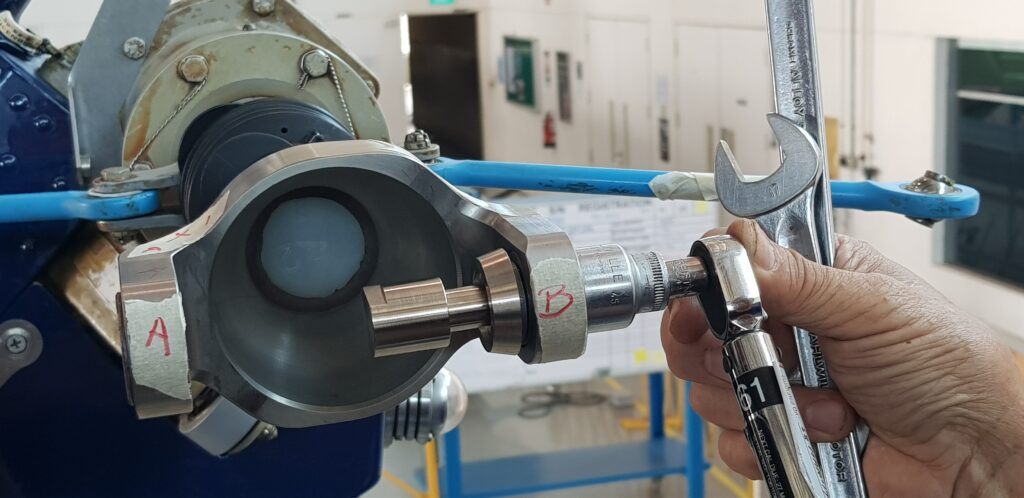
Operators’ inadequate preparation fuels this abuse, an unjustifiable trigger for AOG. Poor inventory management, neglected predictive maintenance, or failure to maintain tooling functionality and calibration force reliance on emergency channels. Neglecting spares like hydraulic pumps or underusing Health and Usage Monitoring Systems (HUMS) leads to avoidable declarations. Similarly, uncalibrated tools like torque wrenches or alignment jigs can halt maintenance—e.g., an uncalibrated rotor balancing tool grounding an aircraft until OEM intervention. This reactive approach burdens suppliers and MROs with preventable issues, undermining system integrity.
The burden extends heavily to OEM technical support across airframe, engine, and component levels. For airframe OEMs like Sikorsky or Airbus Helicopters, frequent non-emergency AOG calls demand immediate engineering consultations, diverting experts from innovation or certification, causing overtime, burnout, and delayed projects.
Engine OEMs such as Pratt & Whitney or Safran handle overloaded diagnostics for issues like turbine inspections, risking sub-par responses due to fatigue. Component OEMs like Honeywell or Parker Hannifin face high-volume inquiries for data or updates, straining systems and heightening liability.
Overall, this contributes to talent retention challenges and reduced proactive capacity, turning AOG abuse into a quiet crisis that cracks the industry’s foundations of precision and trust.
Real-world examples abound: operators expediting routine avionics replacements via AOG, prompting MROs to enforce verification protocols. Such shortcuts echo regulatory concerns, like illegal operations with non-certified aircraft, where urgency trumps compliance.
Bridging the Gap: Tiered Priorities and Best Practices
To curb this creep and restore clarity, a tiered urgency system can distinguish true emergencies from other priorities, aligning operators with suppliers and OEMs. This nuanced language aligns operator needs with supplier capabilities, fostering efficiency without compromising emergencies. A proposed framework includes:
| Status | Definition | Example |
| AOG | Aircraft is not legally or mechanically airworthy, with no workaround. | Critical system failure (e.g., failed main rotor hub). |
| Critical/Urgent | Aircraft is airworthy, but operations are imminently compromised. | MEL item near expiry; part needed within 24-48 hours. |
| Expedite | Issue should be addressed soon, with moderate operational impact. | Comfort issue on VIP aircraft. |
| Routine | No immediate impact; standard handling. | Cosmetic wear; scheduled maintenance. |
Implementation strategies include:
- Clear Definitions in SLAs: Define tiers in Service Level Agreements, specifying criteria like safety risks or response timelines—e.g., “Critical/Urgent” for near-term delays using standard shipping.
- Technology Integration: Leverage HUMS for predictive maintenance to flag “Critical/Urgent” issues proactively, as explored in HUMS Technology in Helicopters, reducing AOG reliance.
- Transparent Communication: Operators provide context on aircraft status and mission impact, ensuring appropriate resource allocation.
Success stories, like logistics providers such as Helicopter Express offering graduated tiers, show reduced overuse, faster turnarounds, and stronger relationships.
Recommendations for the Industry
- For Operators: Reserve AOG for genuine groundings; use “Critical” or “Urgent” for operational urgencies; train teams on escalation and preparation, including inventory, tooling calibration, and HUMS adoption.
- For OEMs, MROs, and Suppliers: Define AOG criteria in agreements; offer differentiated support levels; challenge unsubstantiated claims while educating clients.
- For Technical Support Teams: 0Standardize intake protocols clarifying airworthiness, dispatch impact, and concerns; maintain transparency to protect resources.
Industry bodies like the FAA or EASA can lead by establishing guidelines and promoting training to emphasize that poor preparation justifies no emergency status.
Conclusion: Reclaiming AOG and Stopping the Cry of Wolf
The AOG status in rotorcraft industry thrives on precision and trust, but its misuse—fueled by poor preparation—cracks these foundations. By adopting tiered priorities and better practices, operators can streamline support, cut costs, and ensure true emergencies get priority. AOG must remain sacred: a call to action when an aircraft cannot fly. It’s time to stop crying wolf and restore clarity— because in rotorcraft, every minute and every word matters.
Connect and Share on the Rotorcraft Network!
Categories: Rotorcraft Operations, Aviation Maintenance, Supply Chain Management
Tags: AOG, Aircraft on Ground, rotorcraft maintenance, helicopter operations, aviation supply chain, critical urgent status, MRO, aviation safety, OEM technical support, AOG abuse




![561043-VTOL gear up[68]-4cfacb-original-1730844164](https://magazine.maingearbox.com/wp-content/uploads/2025/07/561043-VTOL-gear-up68-4cfacb-original-1730844164-scaled.jpg)